LicensedInsuredFamily-owned40 years of experience100% satisfaction guarantee
Commercial service
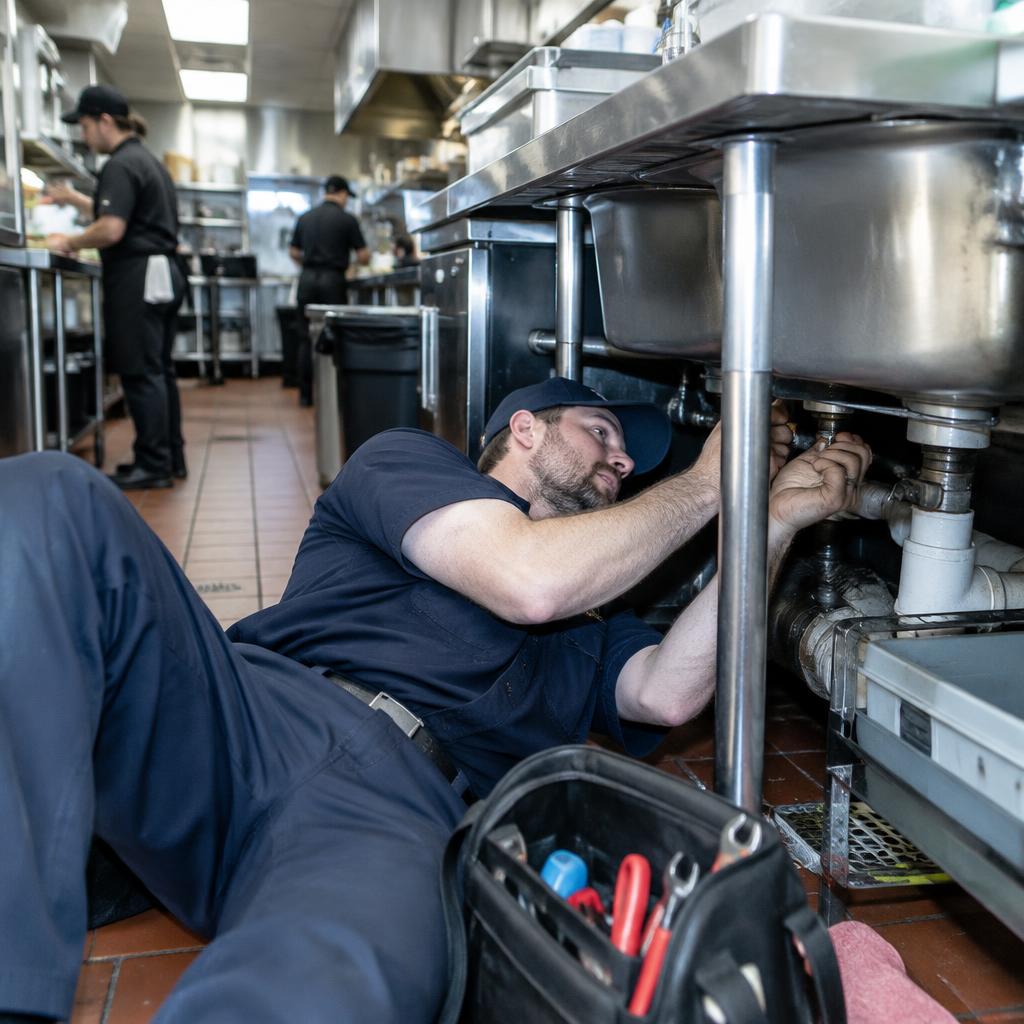
Commercial kitchen lines need a maintenance rhythm, not emergency calls. We jet grease lines on a schedule, service interceptors, and keep the documentation your health inspector asks for.
Talk to a master plumber
Call for restaurant & kitchen plumbing anywhere in Denton County.
214-287-0445Camera records and jetting intervals tracked per location.
Recurring service windows before close or after hours, with reports on file.
Why it matters
Restaurants push plumbing harder than almost any other business. Grease, food solids, and constant high-volume use mean drains and interceptors need real attention — and a backup during a dinner rush can shut down a kitchen and put you on the wrong side of health requirements. Planned maintenance and fast, knowledgeable repairs keep your kitchen open and compliant.
We follow the problem through prep sinks, dish equipment, floor drains, and grease systems to find where it actually starts — which is often not where it shows up.
Lines are cabled or jetted as appropriate, with grease-control equipment serviced or coordinated so your kitchen is back in service quickly.
Based on your volume and history, we recommend a cleaning schedule that prevents emergencies instead of reacting to them, with records kept for compliance.
Prep sinks, dishwashing equipment, floor drains, and grease-handling systems can affect one another. A backup may originate beyond the fixture where it appears. Explain when the problem occurs and which equipment is running so the affected line can be identified.
Grease accumulation depends on menu, volume, disposal practices, and the plumbing layout. Cleaning frequency should reflect the facility's experience and applicable requirements, not a one-size-fits-all calendar. Keep service records and coordinate any specialist interceptor pumping needs.
Identify safe access to cleanouts and the interceptor, share service records, and describe your busiest periods. Keep food and preparation areas protected from any wastewater backup.
Collect grease instead of pouring it down sinks, scrape dishes before washing, and train staff on what must stay out of drains. Maintain grease-control equipment as required.
FAQ
Frequency depends on usage and the history of buildup. Repeated backups indicate the current schedule or grease-control practices may need review.
No. Jetting cleans suitable drain piping; pumping removes accumulated contents from an interceptor. The facility may need one or both services, with the scope confirmed separately.
Yes. Wastewater near food or preparation areas needs prompt attention. Follow applicable health requirements and isolate the affected area while arranging service.
Word of mouth
Read current, verified customer feedback on Jensen Plumbing's Google Business Profile.
Read Google reviews